Temple n600e134
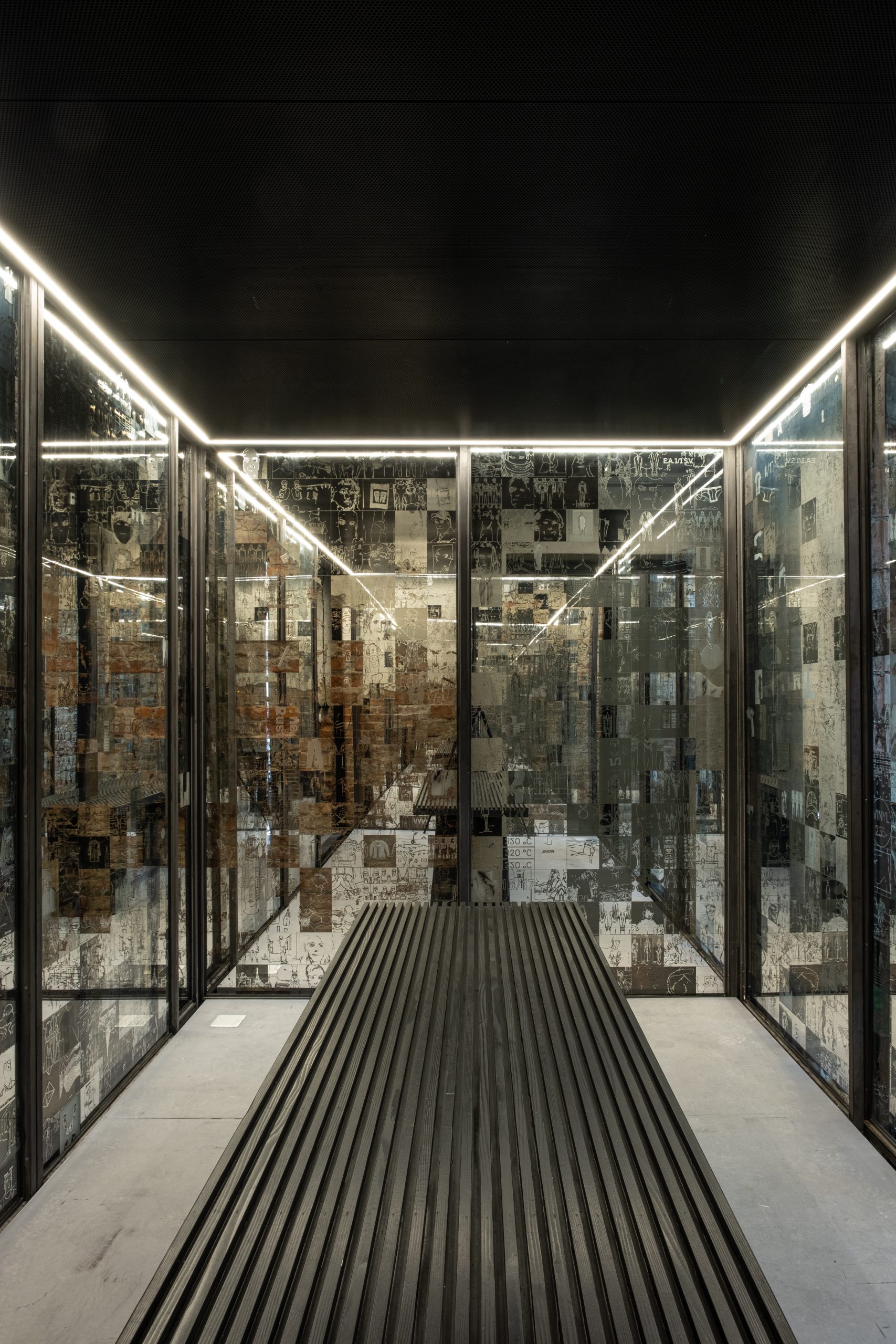
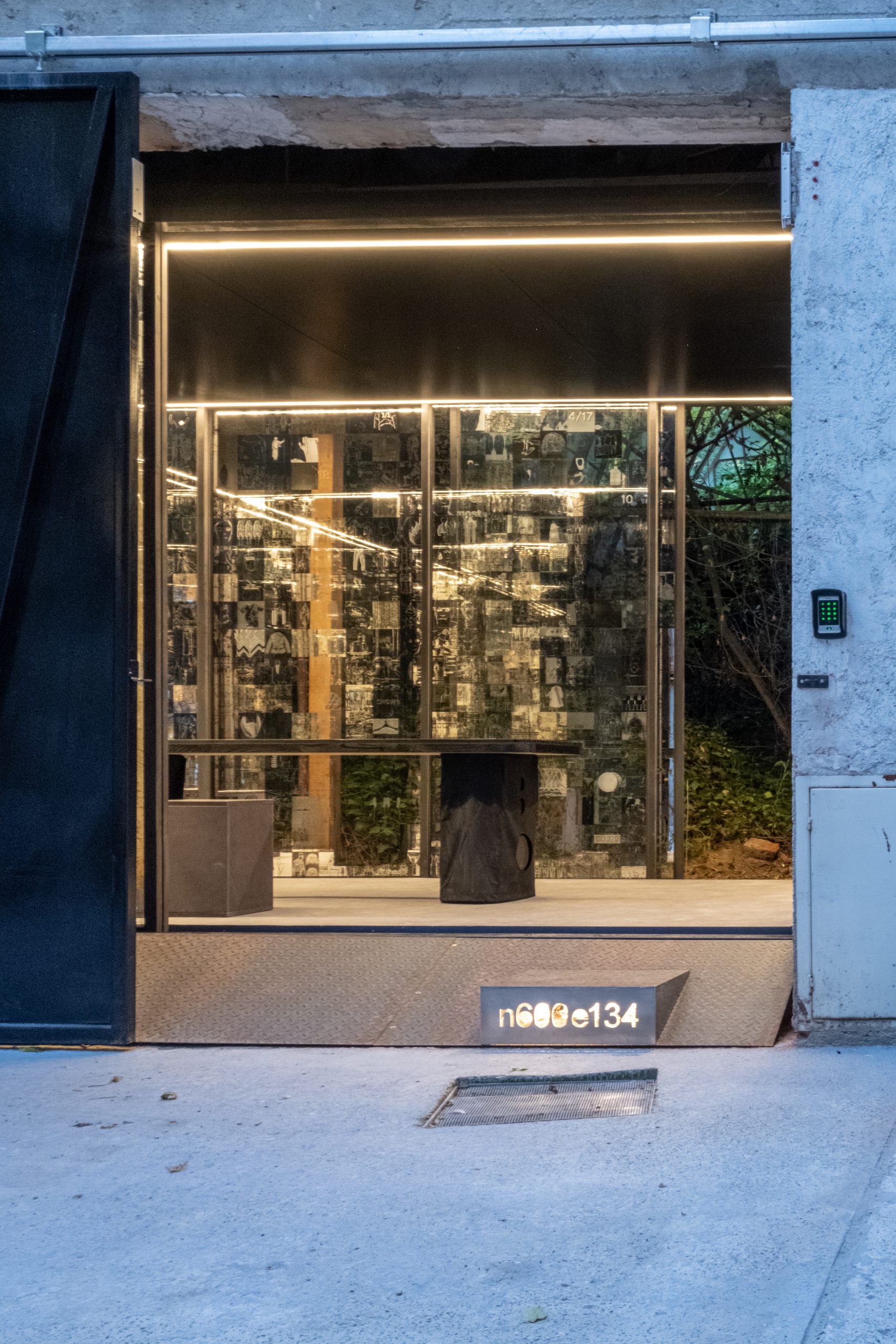
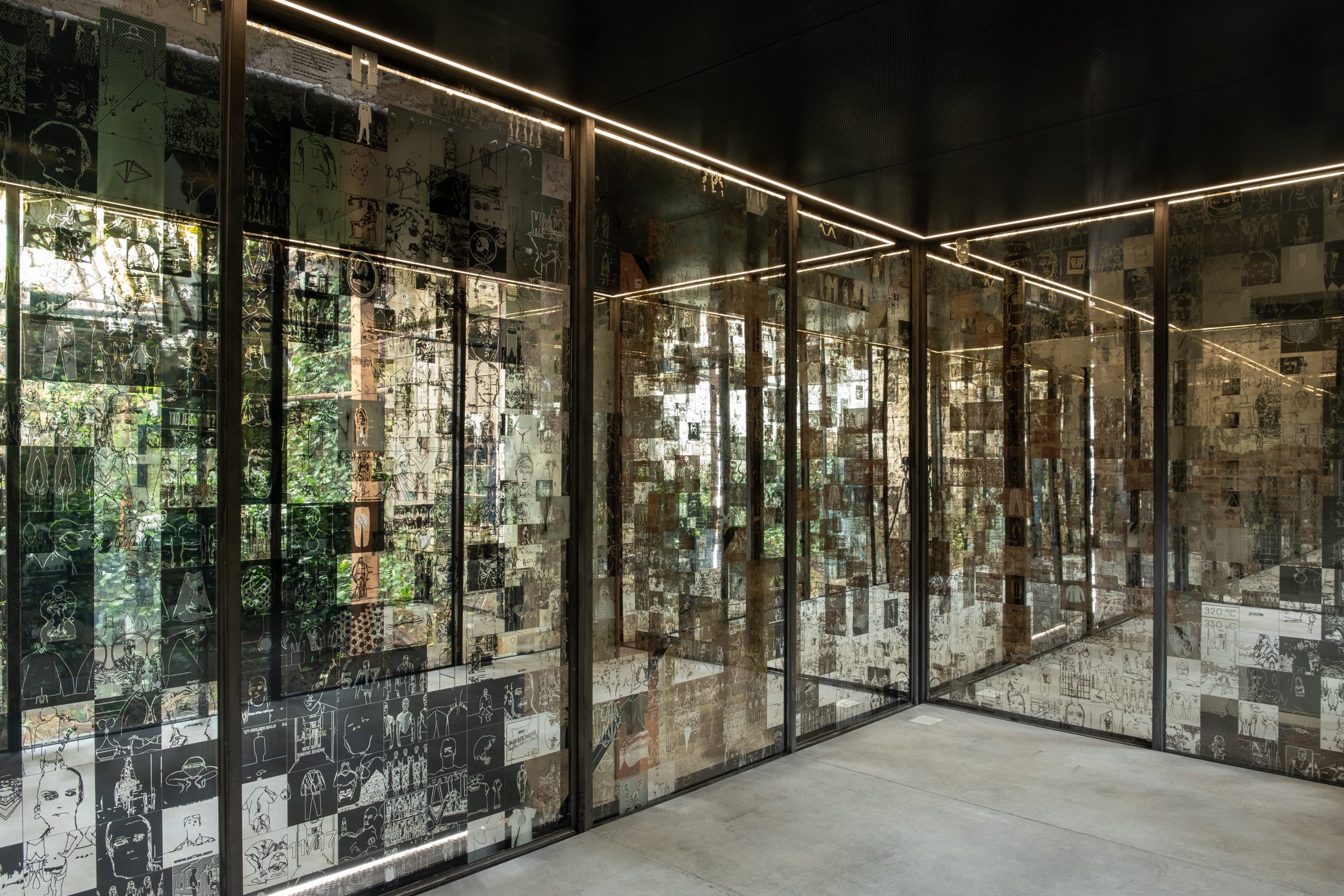
TEMPLE n600e134 is an architectural glass pavilion designed as a spatial system rather than a standalone object. This four-sided structure features over 1,600 reflective image elements arranged in a continuous grid, transforming the pavilion’s envelope into a layered field of images, reflections, and light.
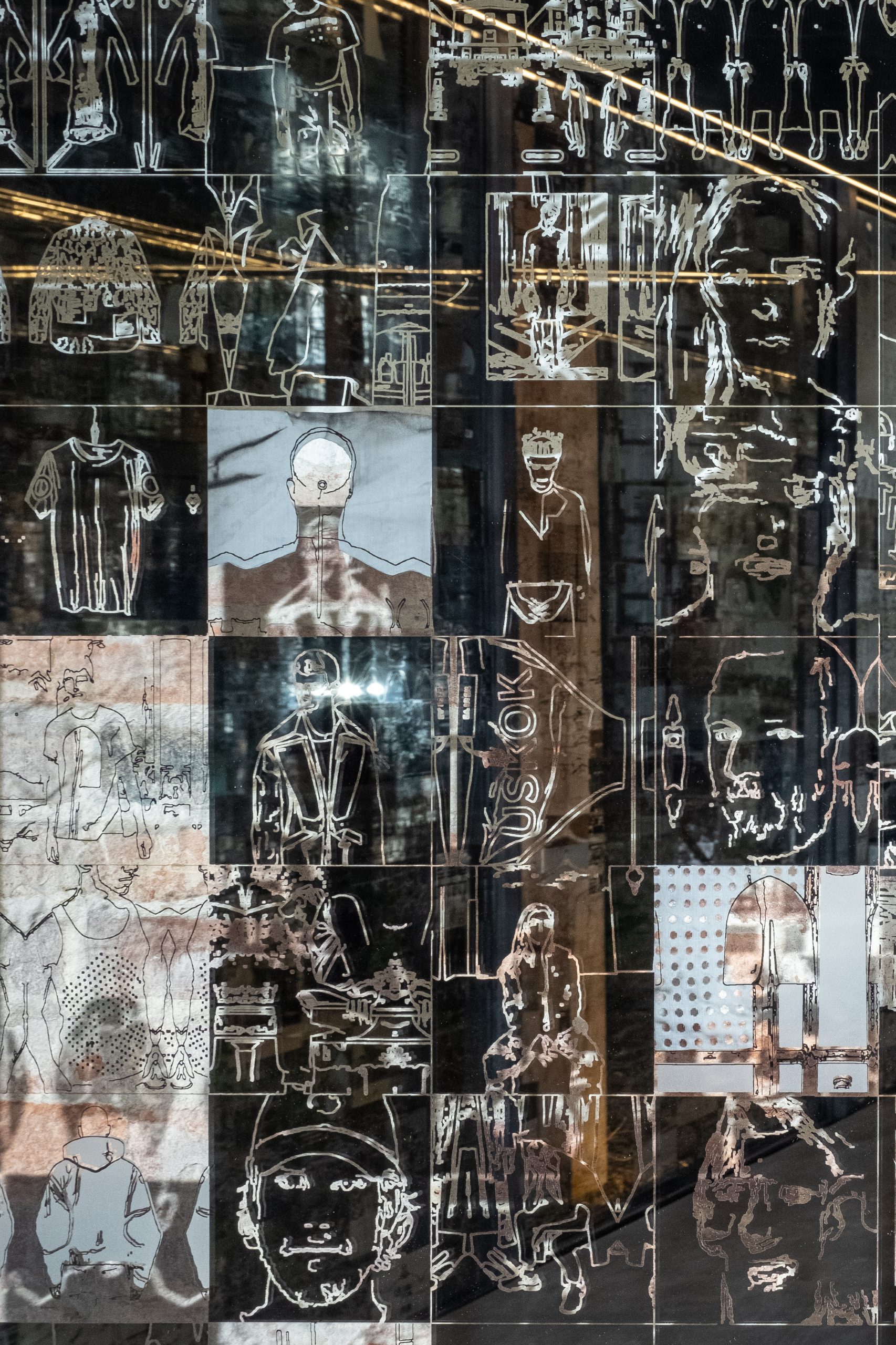
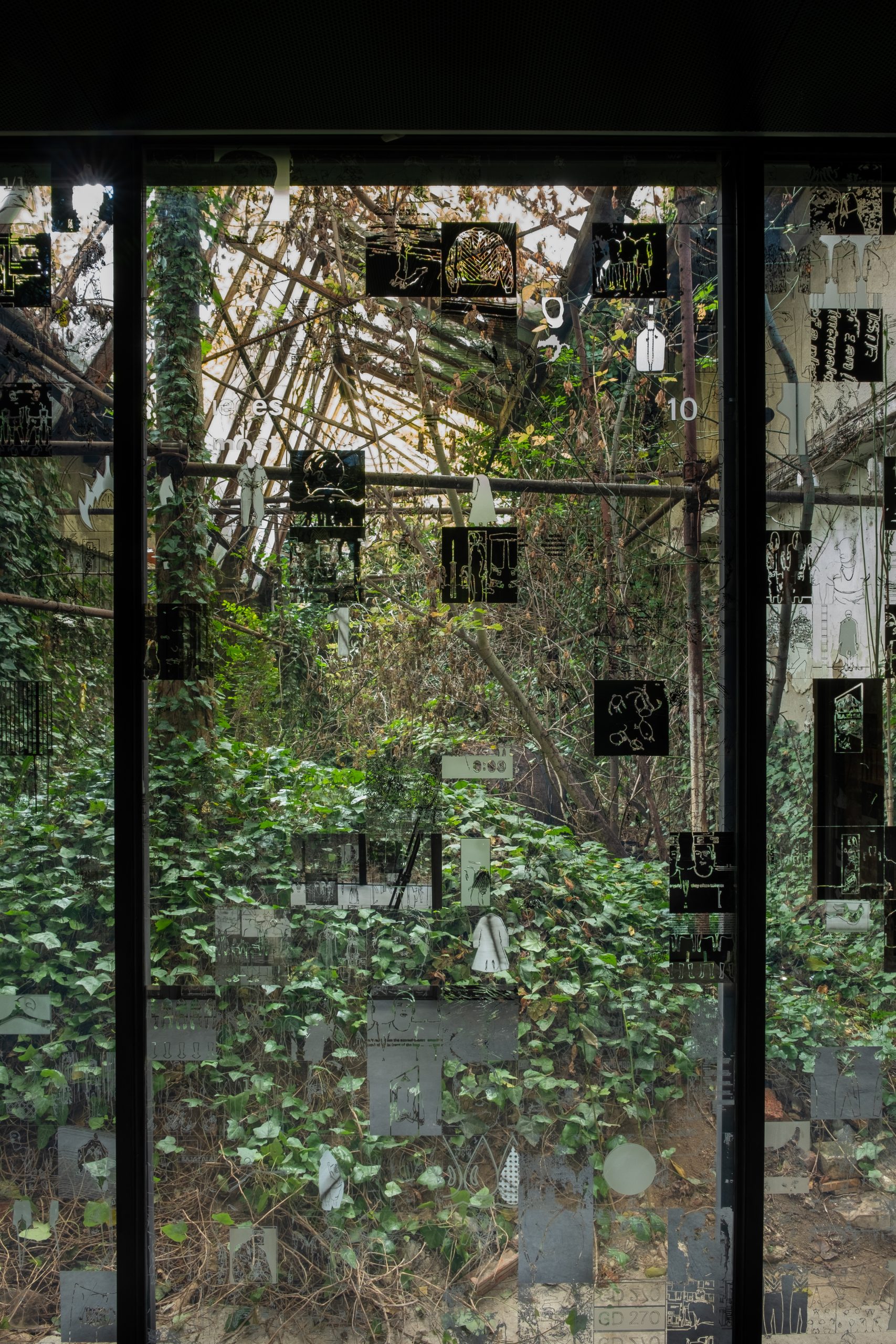
Each glass panel is created using a composite process that involves silver mirror application, double-sided sandblasting, and textile lamination. These techniques produce controlled variations in transparency and reflectivity, allowing images to appear, vanish, or mirror the surrounding environment based on lighting conditions, viewing angles, and distance. The sliding glass panels are visible from both the interior and exterior, blurring the traditional boundary between inside and outside.
The image system and its spatial configuration were generated by the artificial intelligence designer SOLL, who was trained on the archival material of the fashion brand E.A. 1/1 S.V. Instead of functioning as literal images, the visuals act as abstract fragments assembled into a non-linear architectural archive.
Image placement was tailored according to orientation and intended use. Certain façades allow daylight to filter through, while opposing surfaces emphasize reflection, creating a constantly shifting spatial experience influenced by movement and light.
TEMPLE n600e134 exemplifies Silvio and Sons’ approach to glass as an active architectural material. It is capable of conveying image, memory, and atmosphere while maintaining precision and durability within architectural spaces.
Project Temple n600e134:
Pavilion architecture by Ana Lisonek; glass surfaces and image system by SOLL (AI designer); material design and logic by Silvio and Sons.
Photo: Ivan Slipčević