White Loft
In the White Loft project, textile laminated glass by Silvio and Sons is used as an integral architectural material that defines surfaces, transitions, and atmospheres within the apartment.
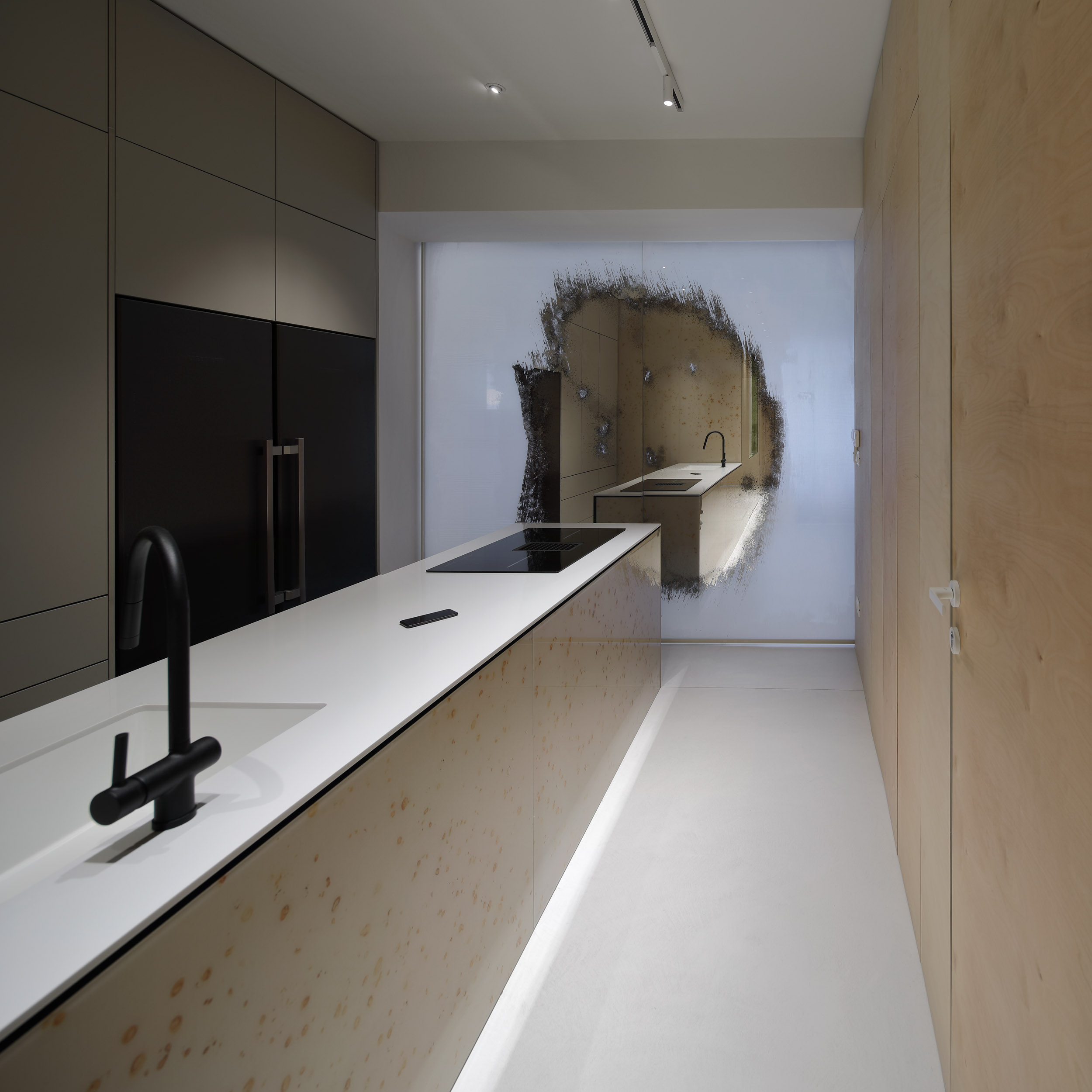
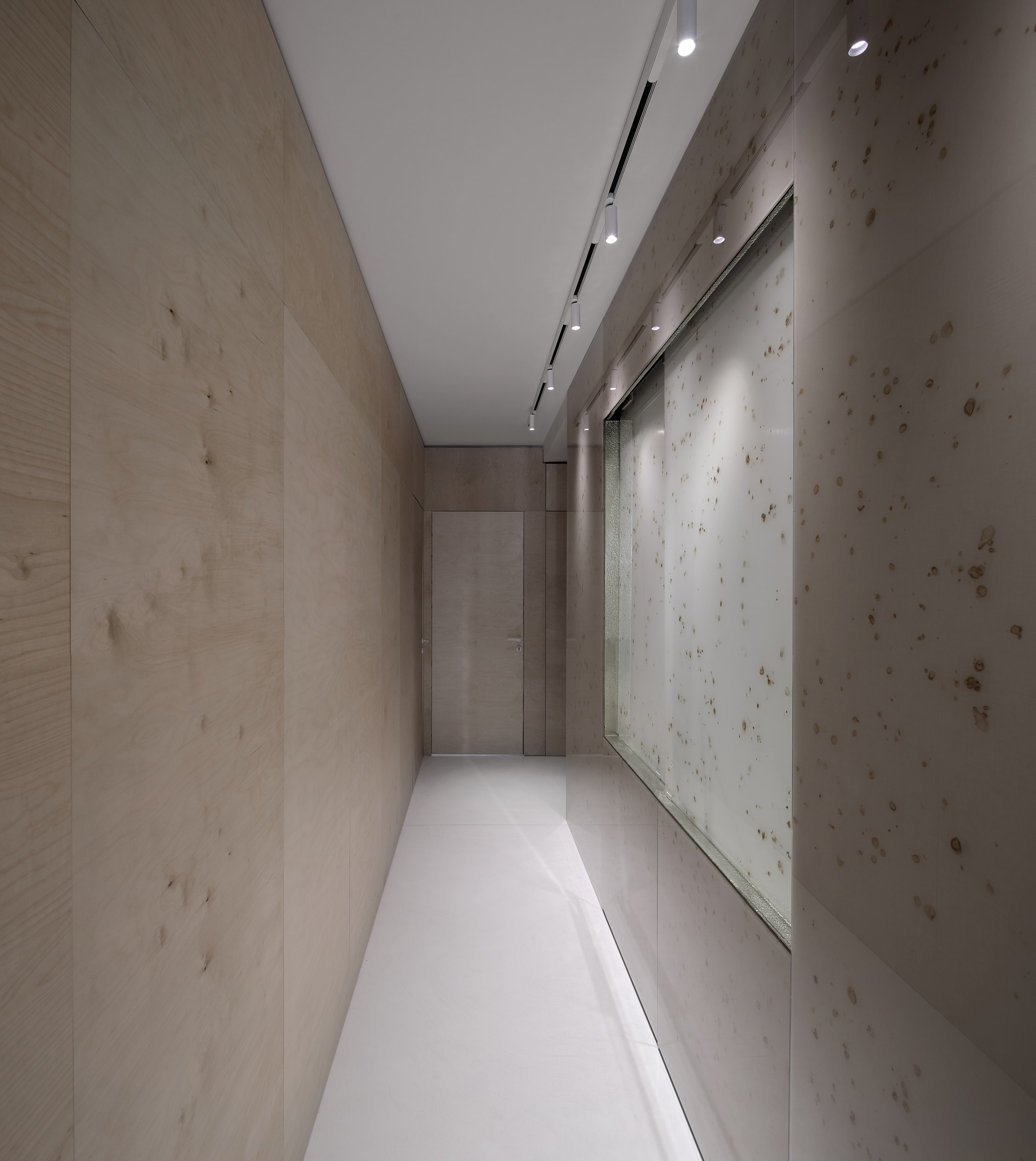
The corridor walls and kitchen island are clad in Rust Glass, a textile laminated glass developed through a controlled oxidation process. White translucent textiles are treated in stages, allowing rust to form gradually within the fibers before being permanently sealed between glass panes. The resulting surfaces display subtle tonal transitions and layered mineral patterns that recall natural sedimentation.
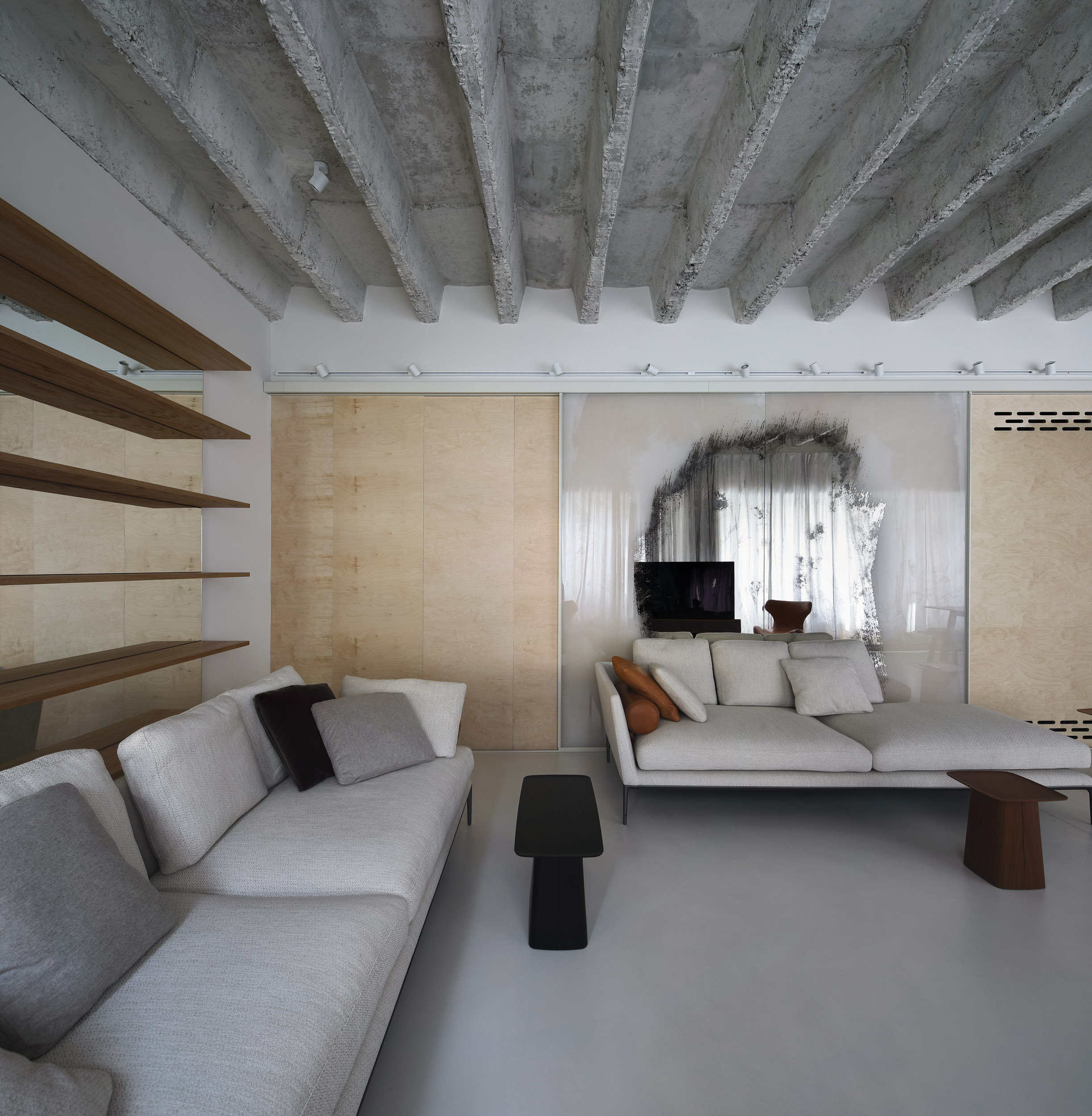
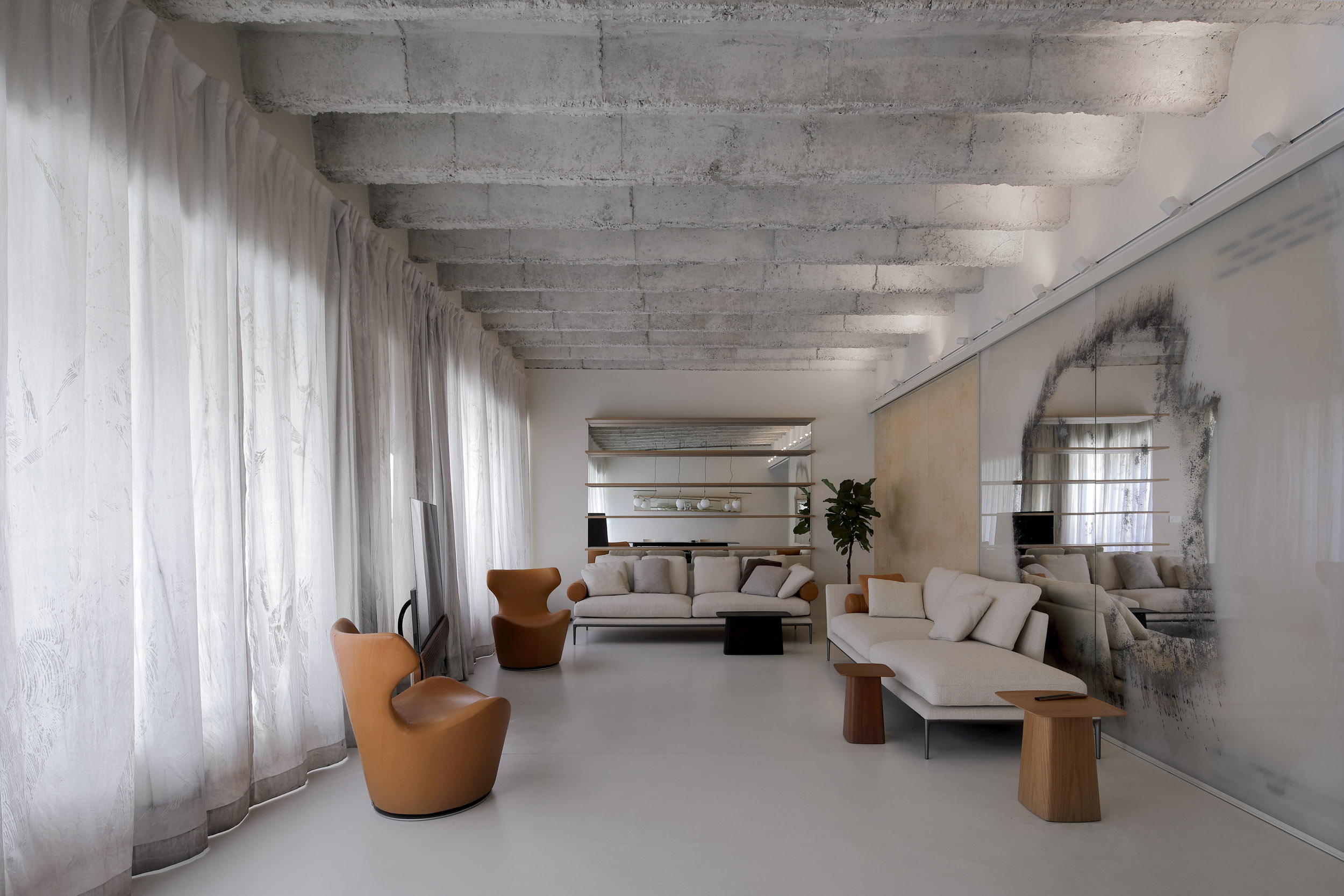
A mobile partition between the living area and kitchen is realized using Mega Stroke, a bespoke glass surface featuring a large mirrored gesture applied on both sides of translucent textile laminated glass. The mirrored form reads differently depending on movement, light conditions, and viewing angle, alternately opening and closing the space visually. This element functions simultaneously as divider, reflection, and spatial connector, allowing flexibility without fixed separation.
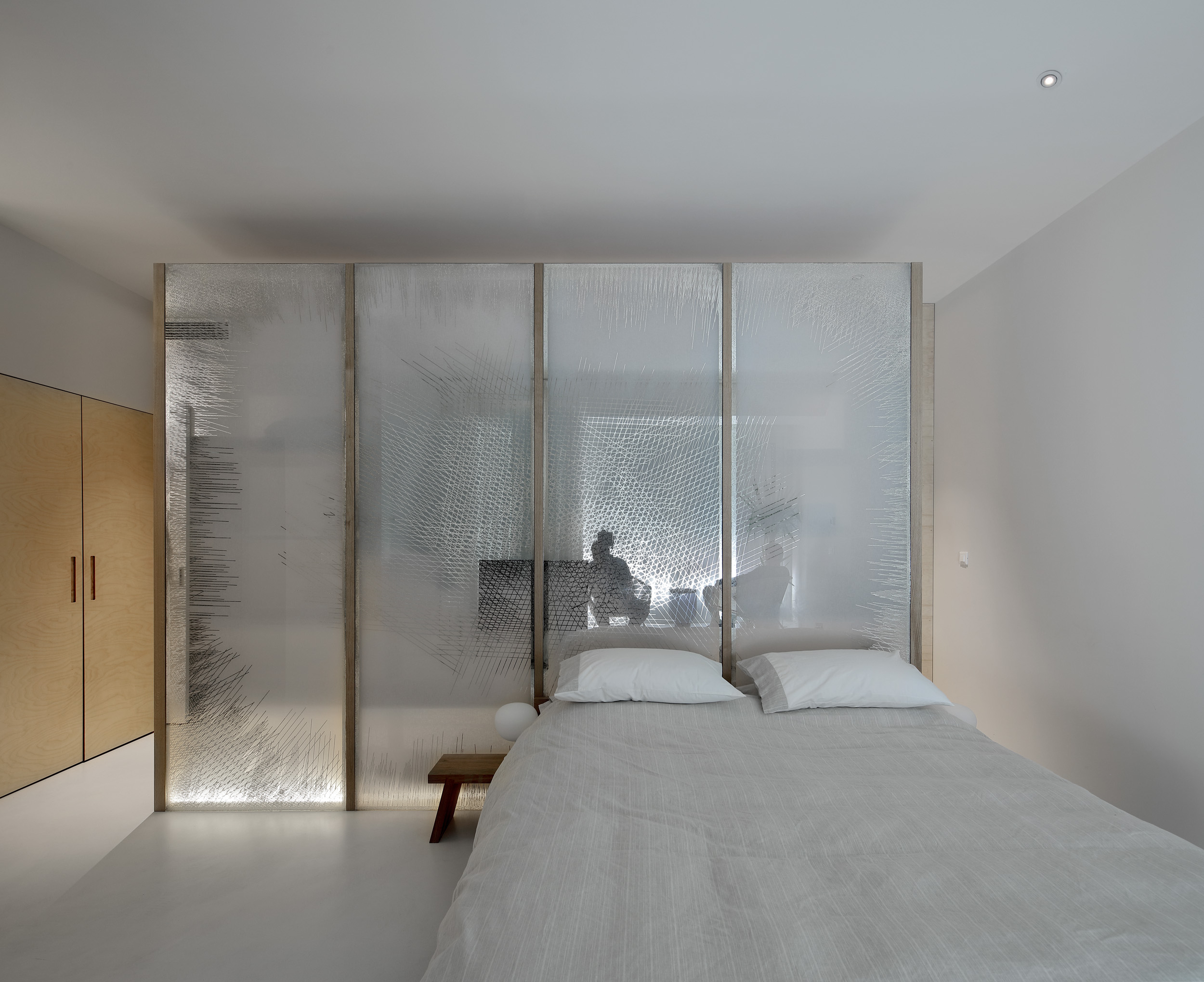
In the bedroom, a custom wardrobe panel is produced by laminating a coarser cotton textile combined with a system of silver mirror lines. The composition creates a surface that visually oscillates, appearing to shimmer and shift as light and perspective change. The glass panel also serves as a diffuser for the wardrobe located behind it, filtering light while maintaining visual depth and privacy.
Throughout the project, glass is not treated as a neutral enclosure but as an active architectural surface that carries texture, reflection, and atmosphere. The White Loft demonstrates how textile laminated glass can operate across multiple domestic functions, from walls and furniture elements to spatial dividers, while maintaining material consistency and calm.
Project credits:
Architecture by Studio UP.
Glass surfaces and bespoke material solutions by Silvio and Sons.
Photo: Robert Leš